
Choose the scenery before the route
China’s landscapes range from forested valleys and mountain lakes to grasslands, coloured rock formations and canal towns. This guide introduces 10 destinations to help you decide which scenery to prioritise.
Chat is taking longer than usual to open. You can also reach us on WhatsApp or by email.
WhatsApp +852 6342 5622customerservice@ascendiatour.comRather than trying to include every destination, start with 1 or 2 regions. Compare the connections, walking involved and overnight stops before adding more places.
1. Jiuzhaigou — Lakes, waterfalls and forests
Jiuzhaigou in northern Sichuan combines blue and green lakes, layered waterfalls and forested valleys. Autumn brings colourful foliage, while the lakes and mountain scenery provide the focus in other seasons.
Visits combine scenic-area buses with walking between viewpoints. Allow time for the walking, not just the bus rides. On our Jiuzhaigou trips, the guide gives a briefing at the entrance and explains where to meet afterwards; you then explore the scenic area at your own pace.
2. Huanglong — Terraced pools and mountain scenery
Huanglong’s natural travertine terraces form a series of shallow pools against a backdrop of forest and mountains. It can be combined with Jiuzhaigou on a Sichuan trip.
Allow about 3–5 hours for the visit, depending on the route. Routes differ in how much walking they involve and whether they use the cableway, so choose one that suits your pace.
3. Zhangjiajie — Sandstone pillars and forest
Zhangjiajie’s sandstone pillars rise above dense forest, with mist sometimes passing between the peaks. The main planning task is choosing which viewpoints to visit, not simply adding as many as possible.
Walkways, lifts and cableways serve different parts of the area, so choose a route that links the viewpoints you most want to see.
4. Guilin and Yangshuo — Karst peaks along the Li River
Guilin and Yangshuo offer river scenery framed by karst peaks, fields and village roads. A river journey, countryside drive or walk beside the water provides a different way to see the landscape.
Choose the experience you want first, then check its starting point and onward transport. Avoid filling the same day with too many separate river and countryside activities.
5. Mount Siguniang — Snow peaks and valleys
West of Chengdu, Mount Siguniang brings together snow-covered peaks, conifer forests, meadows and deep valleys.
Shuangqiao Valley is an option for sightseeing using local scenic transport. Other valleys involve different walking routes, so specify the valley when comparing itineraries rather than treating Mount Siguniang as a single stop.
6. Huangshan — Granite peaks, pines and clouds
Huangshan is known for its granite peaks, pine trees and cloud-filled valleys. A sea of clouds depends on the weather and should not be the only reason for choosing a particular date.
Cableways form part of the access, but routes still involve steps. If sunrise or sunset is a priority, compare an overnight stay on the mountain with staying nearby.
7. Yunnan — Lakes, terraces and snow mountains
Yunnan offers several different landscape settings, including Erhai Lake, mountain scenery near Lijiang, terraced fields and forested valleys.
Choose specific stops rather than treating the whole province as a single destination. A slower itinerary leaves room for lakeside visits and time in the towns, instead of concentrating only on transfers.
8. Inner Mongolia — Grasslands and open horizons
Inner Mongolia offers broad grasslands, grazing animals and open skies. The seasonal appearance of the grassland matters when choosing travel dates.
Grassland scenery varies from area to area. If you want a yurt stay, ask for one: not every grassland trip includes it, and facilities differ between camps.
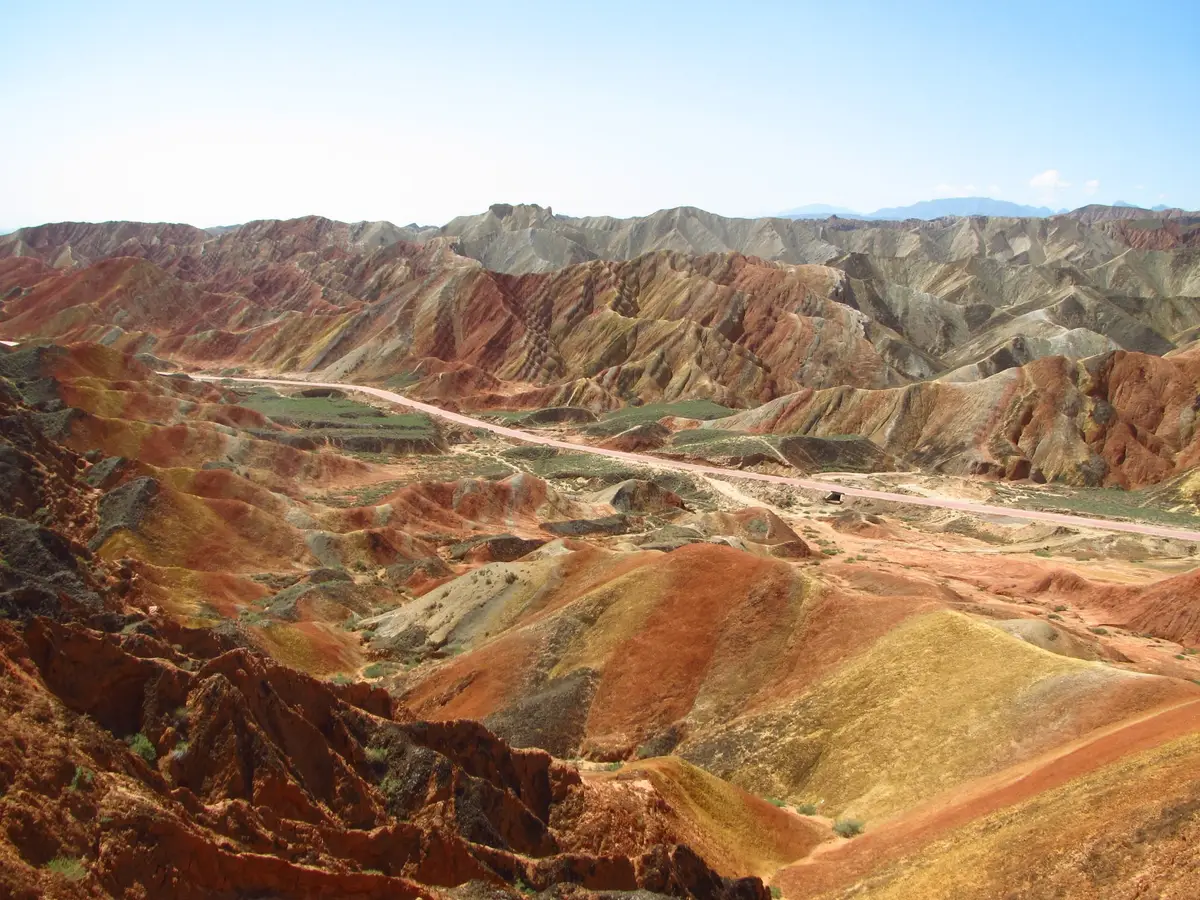
9. Zhangye Danxia — Banded rock formations
Zhangye Danxia in northwestern China has rolling formations marked by red, orange, yellow and brown bands. Viewing platforms offer different perspectives across the hills.
It can be considered alongside a broader Silk Road route. Compare the distances between stops before adding historic towns and desert destinations to the same trip.
10. Jiangnan water towns — Canals and stone bridges
The water towns around Shanghai, Suzhou and Hangzhou offer a contrast to mountain scenery: canals, stone bridges, white-walled houses and waterside trees.
Leave time to walk beside the canals rather than rushing through several towns. If you’d like a boat ride, local operators run routes along the canals, showing the town from the water.
Choosing when to travel
There is no single best season for every destination in this list. Decide whether your priority is autumn foliage, grassland scenery, mountain views or time beside the water, then match the place to your travel month.
When you settle your dates, weigh access, scenic-area transport and cableways alongside the forecast and the amount of walking.
3 starting points for a regional trip
- Sichuan: consider Chengdu, Jiuzhaigou, Huanglong and Mount Siguniang, then select the stops that fit your available time.
- Southern landscapes: begin with Guilin and Yangshuo; assess the additional connection separately if you also want Zhangjiajie.
- Eastern scenery and towns: consider Shanghai, Suzhou, Hangzhou and a Jiangnan water town, with Huangshan as a mountain extension.
These are planning ideas rather than set itineraries; the connections and overnight stops depend on which places you combine.
Planning with Ascendia Tour
For a focused Sichuan option, our 3-day Jiuzhaigou and Huanglong trip includes return rail travel between Chengdu and Huanglong Jiuzhai or Songpan station, connecting road transport and 2 nights near the Jiuzhaigou entrance in a twin room with a private bathroom. Travellers take the train independently, and the guide meets them at the destination station. No named hotel is guaranteed.
That trip allows about 6 hours in Jiuzhaigou. Main entrance tickets for Jiuzhaigou and Huanglong are included, but the compulsory Jiuzhaigou scenic-area bus is paid locally; Huanglong’s cableway and sightseeing bus are optional extras bought locally.
For a tailor-made trip, tell us the destination, rough month and number of travellers, and we’ll send a route and price you can check before you book.
For Jiuzhaigou, Huanglong and Mount Siguniang, consider the actual altitude, steps and walking before selecting the route. These mountain visits should be assessed separately from a city or canal walk.