
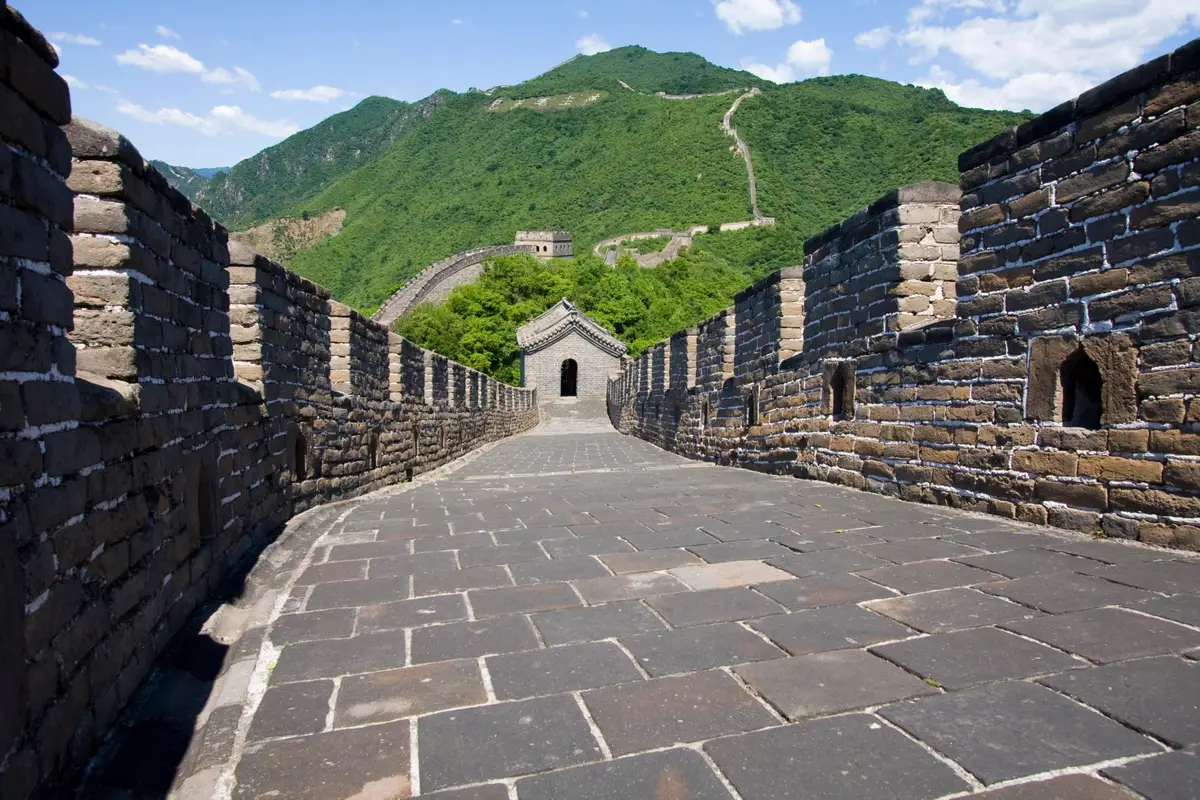
A Great Wall visit near Beijing starts with choosing the section that suits your interests. Badaling offers views of the wall following the mountain ridges; Simatai can be considered alongside Gubei Water Town; Mutianyu combines the wall with wooded mountain scenery. Rather than trying to visit every section, choose according to what you want to see and how much walking you want to plan.
Chat is taking longer than usual to open. You can also reach us on WhatsApp or by email.
WhatsApp +852 6342 5622customerservice@ascendiatour.comBadaling: walls and mountain views
Badaling is a preserved section of the Ming Great Wall. Its substantial walls, towers and mountain setting make it an option for travellers who want to see the wall stretching across the ridges. Some wall-top paths are broad, but the walk is not easy all the way, so plan for some climbing.
Holidays bring the biggest crowds, so aim for a weekday or an early start, though neither guarantees a quiet wall.
Simatai: consider it with Gubei Water Town
Simatai’s wall follows steep mountain ridges. Choose it for that dramatic setting rather than as a quieter alternative to Badaling. Not every stretch is open to visitors, so plan your walk around the open sections.
Nearby Gubei Water Town gives you another place to explore, with stone-paved streets and evening lanterns. Daytime access to the wall does not always include an evening visit, so if you want the wall and an evening in the town, allow time for both.
Mutianyu: wooded scenery and photography
At Mutianyu, the surrounding vegetation adds to views of the wall and watchtowers. Flowers, autumn colour and snow can all add to your photographs when the season and weather line up.
A cable car and a toboggan can save effort on the way up and down. You will still walk on the wall itself, so choose a route that suits your family.
Jiankou: do not treat photographs as a walking route
Jiankou is known through photographs of unrestored wall and weathered watchtowers on steep ridges. A photograph does not show whether a route is open, so for a walk choose a section that is officially open to the public rather than a route from pictures or informal posts.
Huanghuacheng and Juyongguan: different settings
Huanghuacheng Water Great Wall combines mountain and lake scenery, with part of the wall extending into the water. It is worth considering if that landscape interests you. Keep to the permitted walking routes; lakeside access does not automatically include swimming or other water activities.
Juyongguan offers a different focus: a fortified pass of the Ming Great Wall, with gate towers and a mountain setting. Consider it if you are more interested in the pass and its architecture than in choosing a section for seasonal foliage.
Before your visit
- Wear comfortable walking shoes and clothing that allows you to move easily.
- Check the weather forecast and choose suitable layers.
- Bring drinking water and some snacks rather than relying entirely on finding vendors along your route.
- Access, entry rules and cable car or toboggan operation can change, so be ready to walk up and down if the cable car is not running.
- Respect the wall: do not mark the bricks or leave litter.
The most useful comparison is not which section is “best”, but which setting and walking plan match your visit. Choose the section first, and we'll plan the transport and the rest of your day around it.