
Mount Tai, Huangshan, Emei and Lushan offer different ways to explore China's mountain landscapes and cultural heritage. Choose according to what interests you most: stone inscriptions, pines and rock formations, Buddhist temples or waterfalls.
Chat is taking longer than usual to open. You can also reach us on WhatsApp or by email.
WhatsApp +852 6342 5622customerservice@ascendiatour.comMount Tai: stone inscriptions and summit views
Mount Tai in Shandong Province combines mountain scenery with a history of imperial ceremonies. Its stone inscriptions include imperial writings and literary works, making them a focus for visitors interested in culture as well as views.
Yuhuangding, or Jade Emperor Peak, is a place associated with sunrise viewing. Treat sunrise as a possible highlight rather than the sole reason for visiting.
Huangshan: pines, rocks and cloud-filled valleys
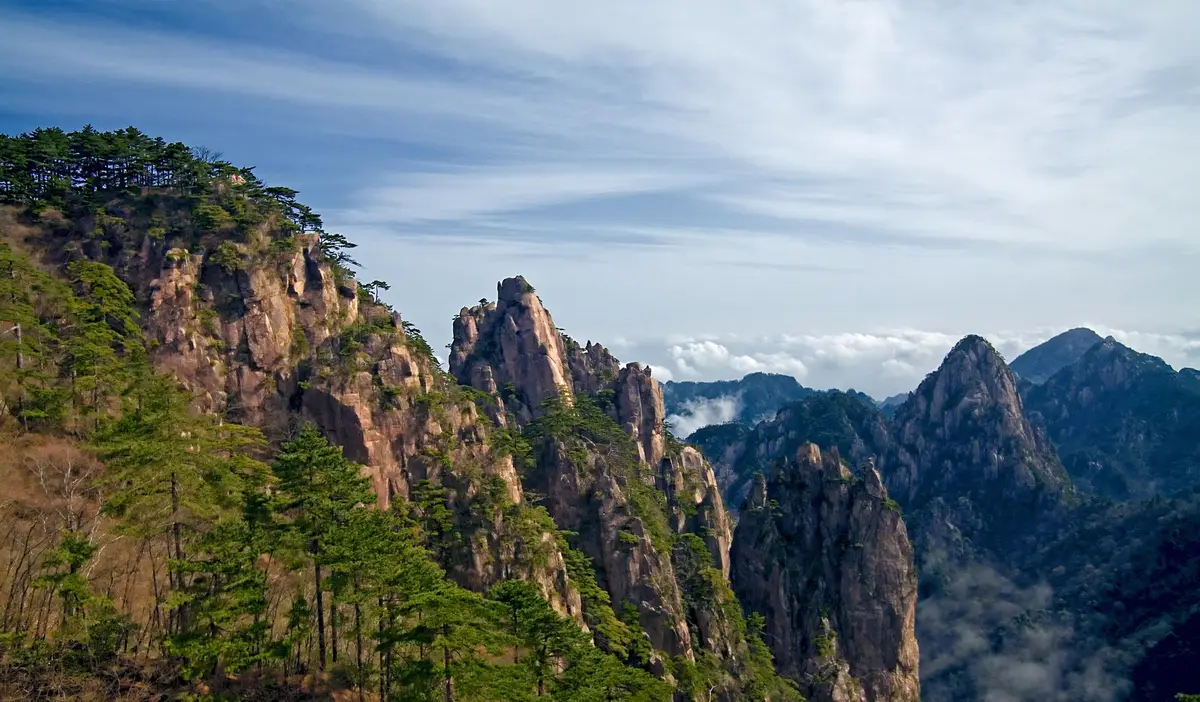
Huangshan in Anhui Province is known for its distinctive pines, rock formations, seas of cloud and hot springs. Named sights include the Guest-Greeting Pine and Flying Rock. These provide specific points of interest when choosing which parts of the mountain to visit.
The contrast between trees, exposed rock and cloud-filled valleys is central to Huangshan's appeal. A sea of cloud is a bonus rather than a certainty, so build the day around the viewpoints and formations you would like to explore.
Mount Emei: temples and the Golden Summit
Mount Emei in Sichuan Province brings together Buddhist temples, forest scenery and the Golden Summit. A visit can focus on the summit area or include walking routes farther down the mountain.
Our current Sichuan itineraries visit the Golden Summit and the mid-mountain area on separate days. Check the transport, walking and queues for each day. The Emei sightseeing bus is paid for separately, while cableways and admission to Wannian Temple are optional extras. Book the summit reservation as soon as your dates are fixed.
Lushan: waterfalls and literary connections
Lushan in Jiangxi Province combines waterfalls, forest paths and a strong association with Chinese poetry. Its waterfalls feature in the work of Li Bai, offering a cultural point of reference alongside the scenery.
Rather than treating Lushan as a single viewpoint, decide whether waterfalls or woodland walks are your priority. On all four mountains, access and opening hours can change, so check the scenic area's notices the week you go.