
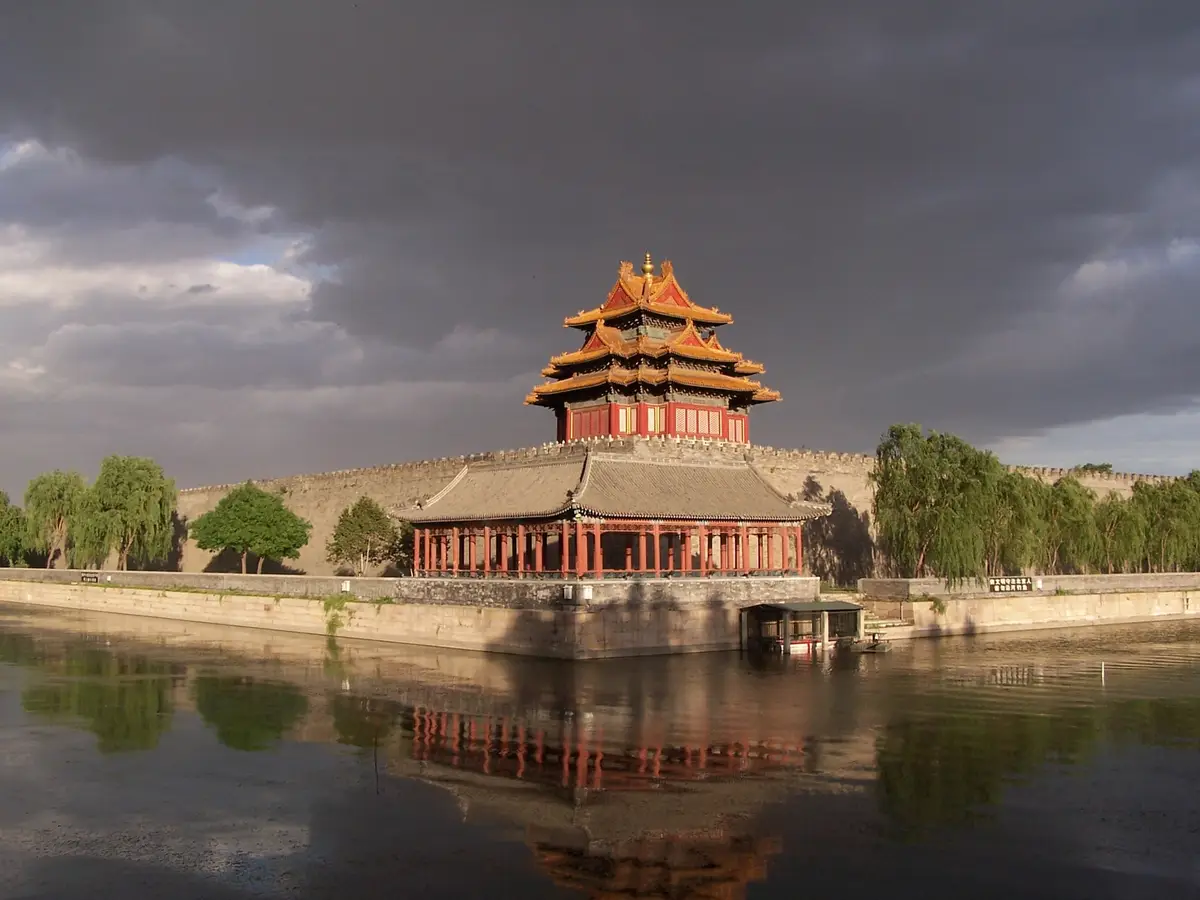
The photograph shows the nearby Forbidden City corner tower, not Taimiao.
Chat is taking longer than usual to open. You can also reach us on WhatsApp or by email.
WhatsApp +852 6342 5622customerservice@ascendiatour.comEast of Tiananmen Gate, Beijing’s Working People’s Cultural Palace occupies the former Imperial Ancestral Temple, also known as Taimiao. Built in 1420, the temple served as the place where Ming and Qing emperors honoured their ancestors.
From imperial temple to public cultural space
On 1 May 1950, it opened to the public as Beijing’s Working People’s Cultural Palace. The site now brings together the temple’s architectural heritage with modern cultural and artistic activities.
Ancient cypresses and garden details
The ancient cypresses are a distinctive feature of the grounds. Many were planted during the temple’s construction in the Ming dynasty, with further planting during the Qing dynasty. Ancient cypresses surround the buildings, their varied trunks and branches contrasting with the red walls and yellow roof tiles.
Gardens among the trees contain pavilions, terraces, waterside structures and ornamental rocks. When planning a visit, consider both the former ceremonial buildings and the surrounding gardens, rather than focusing only on the temple architecture. The relationship between the buildings and the old trees is an important part of the setting.
Opening hours and open areas can change, so check the site’s latest notice the week you go.