
What slow travel means in practice
A different city every day can leave much of a China trip devoted to packing, station transfers and checking into hotels. Slow travel takes another approach: fewer overnight stops, more time in each place and room to revisit somewhere you enjoyed.
Chat is taking longer than usual to open. You can also reach us on WhatsApp or by email.
WhatsApp +852 6342 5622customerservice@ascendiatour.comThe suggested stays below are starting points for planning. Choose destinations that fit your interests and available time rather than combining all 8 into a single trip.
1. Dali, Yunnan: 3–4 nights
Dali combines an old town, mountain scenery and villages beside Erhai Lake. Allow separate days for the old streets, the lakeshore and nearby villages rather than trying to cover them all in a day trip.
A longer stay also leaves time for cafés, local markets and another walk through the old town. Walk it at different times of day to see how its mood changes.
2. Hangzhou, Zhejiang: 2–3 nights
West Lake can be the focus of several outings rather than a single sightseeing stop. Divide your time between lakeside walks, gardens, temples and tea-growing areas. If you want a boat trip, make it part of one of the lakeside outings.
Choose your hotel in relation to the lakeside areas you want to visit. A central address alone does not tell you how much travelling your daily plans will involve. Hangzhou can form part of an eastern China route or be a destination in its own right.
3. Suzhou, Jiangsu: 2–3 nights
Suzhou offers classical gardens, canals, old streets, museums and craft traditions. Instead of treating it only as a short excursion from Shanghai, allow time for a garden visit and a separate afternoon exploring the old city.
Plan 1 main garden rather than several in quick succession. Use the remaining time for canal-side walks or visits centred on embroidery, silk and traditional architecture. Staying overnight gives you more choice over when to explore.
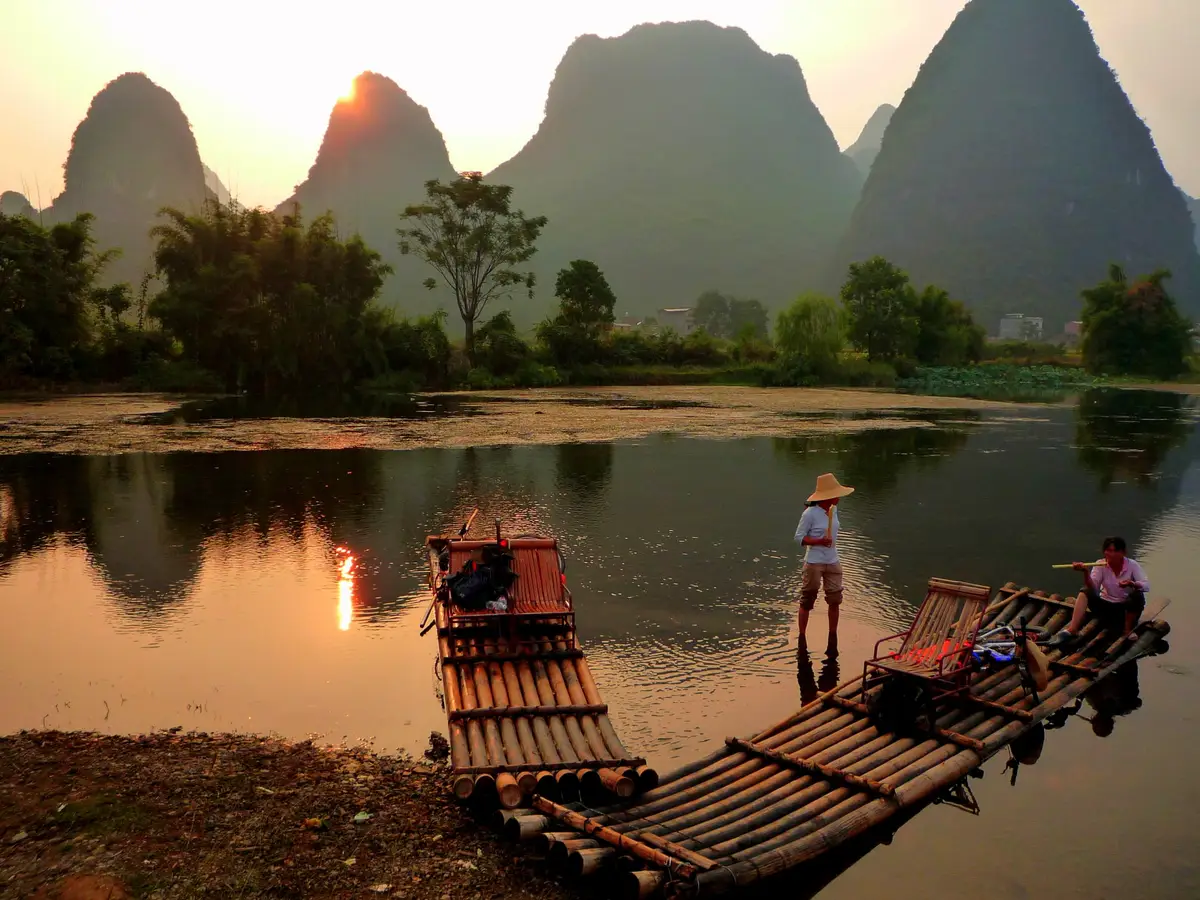
4. Yangshuo, Guangxi: 3 nights
Yangshuo’s karst peaks, rivers and countryside suit an itinerary with space between activities. A countryside drive, a walk and a river outing need not all happen on the same day. If a river outing is the highlight for you, tell us early and we'll build the day around it.
Compare accommodation near the town with countryside options. Think about access to meals, the scenery you want nearby and the transport needed for each outing, rather than choosing on views alone.
5. Chengdu, Sichuan: 3–4 nights
Alongside the panda base, Chengdu has tea houses, parks, historic neighbourhoods and museums. Give these visits their own time rather than filling each day with attractions in different parts of the city.
An additional day could be set aside for Dujiangyan. If a slower pace is the priority, compare that outing with another day in Chengdu before adding it. Tell us about halal, vegetarian or allergy needs when you enquire.
6. Quanzhou, Fujian: 2–3 nights
Quanzhou brings together religious sites, traditional streets, maritime heritage and local cultural practices. Its appeal is spread across the city, making a short list of visits each day more useful than a packed sightseeing circuit.
Leave time between temples and other sites for local snacks and neighbourhood walks. This approach suits travellers interested in architecture, culture and maritime exchange.
7. Wuzhen and the Jiangnan water towns: 1–2 nights
An overnight stay allows time to see canals, stone bridges and streets in the evening as well as during the day. It also avoids making the entire visit fit between arrival and departure transfers.
Choose a water town that fits the wider route rather than visiting several similar towns in 1 day. If evening strolls matter to you, stay within walking distance of the canals.
8. Xiamen, Fujian: 2–3 nights
Xiamen offers coastal walks, tree-lined streets and historic architecture. Divide your stay between the waterfront, older neighbourhoods and local food instead of using the city only as a transfer point.
Group nearby visits together and leave part of a day unplanned. This keeps the focus on exploring the city rather than moving constantly between stops.
Why allow more nights?
Fewer hotel changes mean fewer occasions spent packing, checking out and moving luggage. An extra night also leaves more flexibility to rearrange an outdoor visit or return to the hotel for a break.
The useful comparison is not simply the number of sights. Look at how much of each day remains after transport and hotel changes.
3 regional route ideas
Eastern China: Shanghai, Suzhou and Hangzhou
Consider arriving in Shanghai, then allowing 2 nights in Suzhou and 2–3 nights in Hangzhou. Let the transport connections between the three cities decide the final order.
Yunnan: Dali and Lijiang
Allow 3–4 nights in Dali and several nights in Lijiang rather than adding distant stops. Keeping the route focused leaves more time for old towns, lake scenery and mountain views.
Sichuan: a Chengdu base
Stay in Chengdu for several nights and consider 1 nearby day trip. Keeping the same hotel reduces packing, but count the full return journey when judging how relaxed a day trip will be.
How to plan a slower day
- Choose 1 main attraction and 1 lighter activity.
- Match the hotel location to your planned visits and meal arrangements.
- Leave at least 1 afternoon unplanned in a 7-day trip.
- Consider luggage and walking preferences when choosing transport.
- Allow time to return to a place you enjoyed.
- Reduce unnecessary flights, train changes and hotel moves.
Who might prefer this approach?
Families, travellers bringing parents, couples and photographers may appreciate having fewer scheduled stops. It also leaves more room for meals, prayer time and rest.
Planning a tailor-made trip
Tell us your preferred destinations, approximate month and who is travelling, and we'll send a route and price you can check before you book. Let us know, too, how often you want to change hotels and how much unscheduled time to keep.